
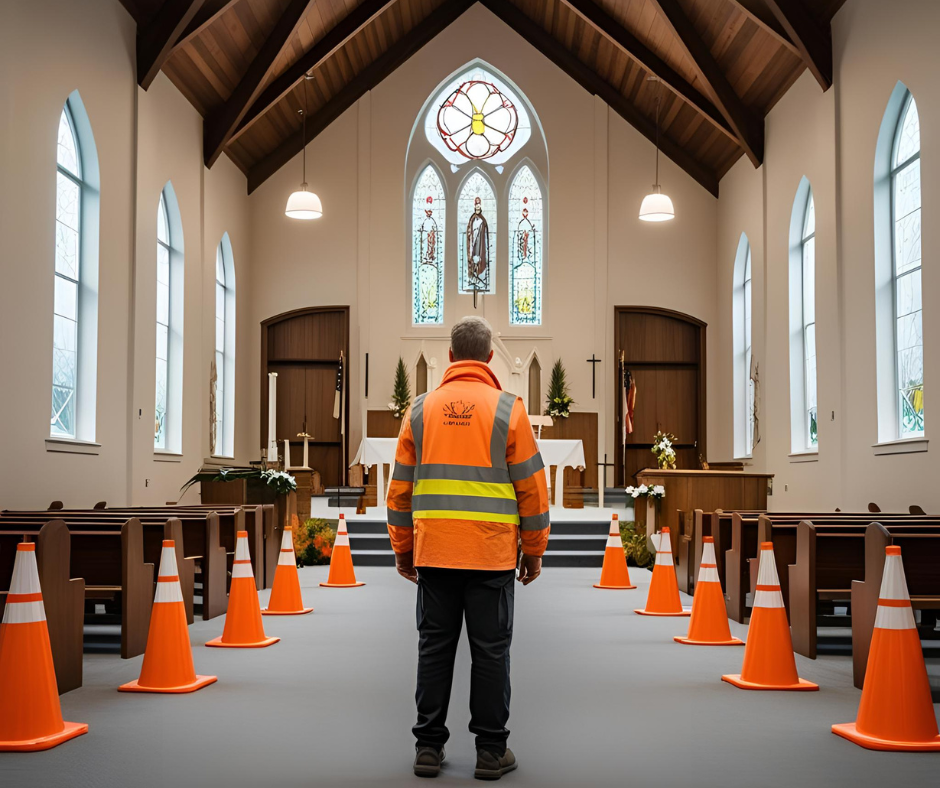
Why Safety Matters is simple: safety is the essential first step for any trauma-informed ministry. Every person who walks through your doors—no matter their story—needs to feel safe physically, emotionally, relationally, and spiritually.
Safety is the foundation for connection and spiritual growth. It’s a universal human need that goes beyond labels or diagnoses. God designed our brains to recognize danger and protect us, which means you don’t have to know someone’s background to understand why safety matters.
Four Key Facets of Safety in Ministry
1. Physical Safety
Clean, well-maintained spaces, clear exits, secure areas, and strong child protection policies all contribute to physical safety. This is the most obvious type of safety—but it’s only the beginning.
2. Emotional Safety
Emotional safety means people can be free from judgment, shame, or ridicule. It creates space for them to be honest and transparent about their story, bringing their whole selves without fear of rejection or harsh criticism.
3. Relational Safety
Relational safety is the trust that you can be fully known without fear of judgment, rejection, or harm—a safe space to share your story and grow in Christ. This begins with pastors and leaders modeling transparency, clear communication, and honoring boundaries. Without trustworthy leadership, even the safest physical space can feel threatening.
4. Spiritual Safety
Spiritual safety means creating a place where people can wrestle with doubts, pain, and questions without fear of condemnation. Understanding trauma is crucial—it prevents misinterpreting trauma responses as sin, immaturity, or lack of faith, and avoids placing spiritual burdens on those already hurting. This is how we make room for authentic faith, even when it’s messy or painful.
The Biblical Foundation for Safety
Safety is not just a modern concern—it flows from God’s very character.
- God is our refuge (Psalm 46:1), a shelter for the weary (Isaiah 40:29), and the one who gives us peace (John 14:27).
- Jesus invites the weary to find rest in Him (Matthew 11:28).
- Paul calls us to “encourage one another and build each other up” (1 Thessalonians 5:11) and urges pastors to be shepherds who guard the flock (Acts 20:28).
The shepherd imagery in scripture is powerful. Consider Psalm 23—the Lord’s presence and protection bring deep assurance of safety, whether in green pastures or in the darkest valleys. One of a shepherd’s most vital roles is to protect the sheep. And for ministry leaders today, it is tied directly to that calling to protect and guide and to why safety matters for Christian churches and ministries.
Why Safety Matters for Ministry
When safety is present, people can worship, learn, and grow in ways that transform lives. When it’s absent, fear and anxiety build walls that block spiritual engagement.
Without physical, emotional, relational, and spiritual safety, it’s much harder for people to heal and grow in Christ. In unsafe environments, the nervous system shifts into defense mode—often resulting in avoidance. If a church feels unsafe, people will disengage or stop coming altogether.
Safety is not just a policy or a program—it’s a tangible way to show the love of Christ. This is why safety matters so deeply for any church or ministry seeking to reflect God’s heart.
One Small Step You Can Take This Week
Before your next service, walk through your church with “safety eyes.”
Ask yourself: If I were new here, would I feel safe physically, emotionally, relationally, and spiritually?
Identify one small improvement you can make this week—and follow through.
If you’d like to go deeper in trauma-informed ministry and learn practical tools for building safety into every aspect of church life, explore our full course Basic Training in Trauma-Informed Ministry. Together, we can build churches where every person finds hope, healing, and community in Jesus.